
“Swim” performance video stuns at historic Hanok.
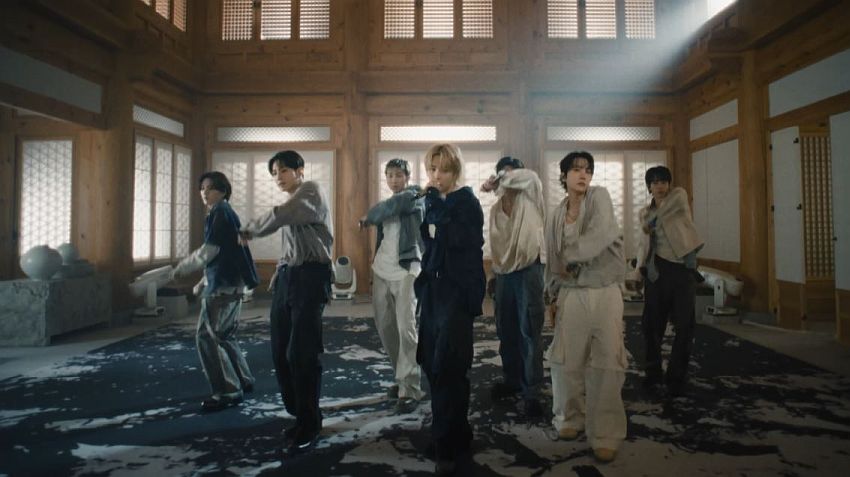
BTS are once again blending past and present—this time through a striking performance video for “Swim” filmed at a traditional Korean hanok tied to one of the country’s most influential business legacies.
The newly released performance video for “Swim,” the lead single from their album Arirang, was filmed at Seonhyeon, a historic hanok complex in Seoul once owned by the late SK Group founder Chey Jong-gun.
Located in Samcheong-dong, the residence—now reimagined as a cultural space—features multiple traditional buildings and has been used for exhibitions and artistic projects following recent renovations.
By choosing this location, BTS placed Korean architectural heritage at the center of a global pop moment.
The filming at the hanok was arranged at BTS’s request, underscoring the group’s active role in shaping the visual identity of their comeback.
The setting offers a sharp contrast to the cinematic, ocean-based official music video for “Swim,” which was filmed in Lisbon and features large-scale production and storytelling.
In contrast, the hanok performance video strips things back—focusing on choreography, atmosphere, and cultural symbolism.
The location itself carries deep cultural weight. Originally purchased in 1968, the residence has evolved from a private family home into a curated cultural complex, hosting exhibitions such as the Seonhye-won Art Project.
This transformation mirrors BTS’s own artistic direction with Arirang—a project that draws inspiration from traditional Korean elements while reinterpreting them for a global audience.
“Swim,” an alternative pop and synth-pop track, reflects themes of perseverance and emotional resilience, aligning with the symbolic depth of its hanok setting.
The performance video adds another layer to BTS’s already expansive comeback rollout, which has included large-scale global events, US performances, and record-breaking chart success.
By anchoring one of their key visuals in a historic Korean setting, BTS reinforce a central message of the Arirang era: a return not just as global superstars—but as artists deeply connected to their cultural roots.
In doing so, they turn a simple performance video into something more—
a statement of identity on a global stage.